
How Long Does Paint Restoration Last?
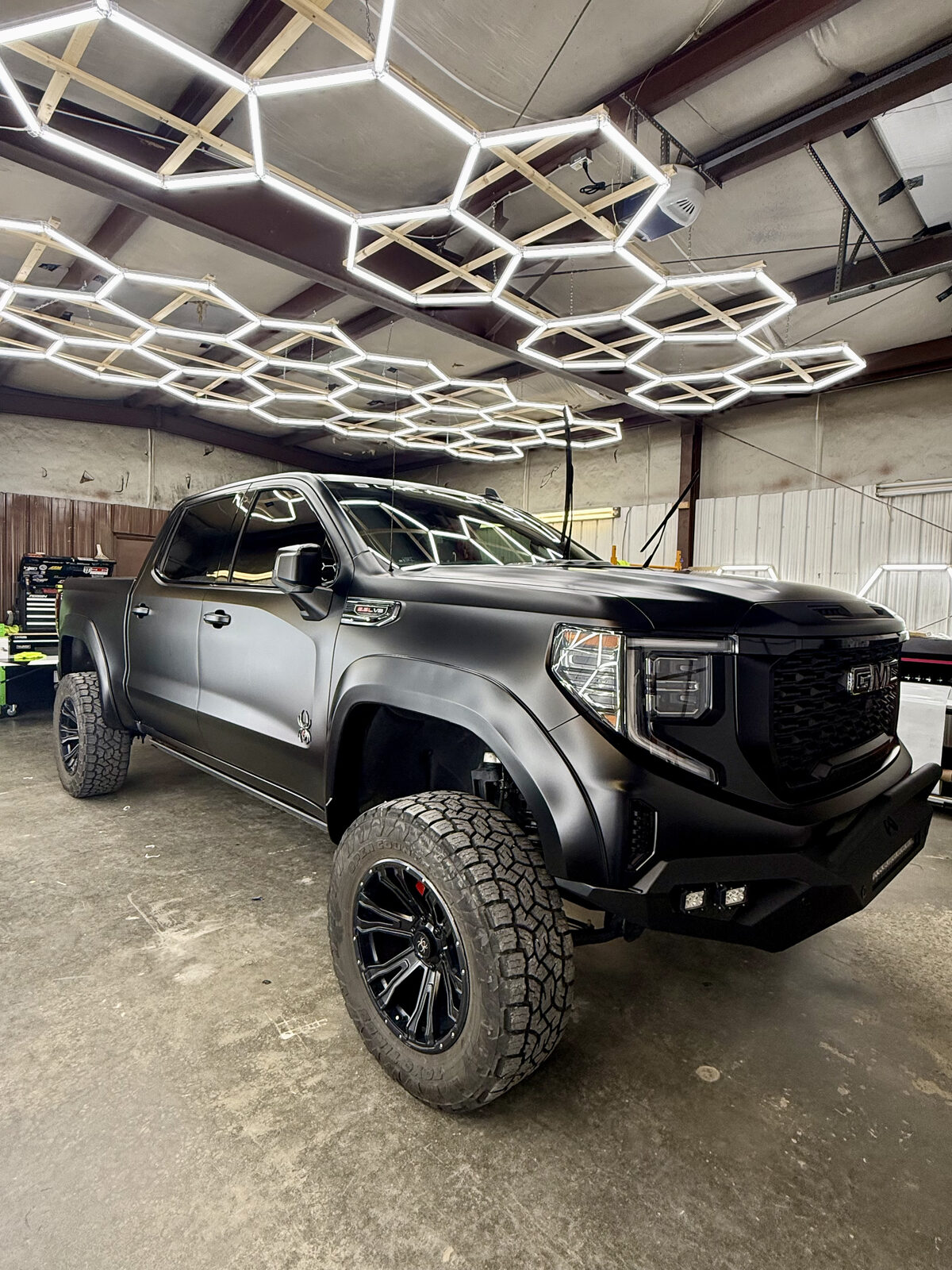
Quick Answer
Paint restoration can last for years.
It can also begin losing its impact much sooner than most owners expect.
The surprising part is that the difference often has very little to do with the restoration itself.
Most people assume the lifespan of a restoration is determined by the products used or the skill of the technician performing the work. Those things certainly matter. But after years of working with faded paint, oxidized surfaces, RV fiberglass, boat gelcoat, and commercial equipment, a different pattern emerges.
The vehicles that continue looking exceptional years later usually have one thing in common:
The owner understood that restoration is not the finish line.
It's the beginning.
The Story Of Two Black Trucks
A few years ago, two black pickup trucks left restoration shops looking almost identical.
Both had spent years outdoors.
Both had heavily oxidized hoods.
Both had lost the deep reflections that make black paint look so striking.
And both owners were thrilled with the results.
If you had parked those trucks side-by-side on the day they were restored, most people would never have noticed a difference.
Fast forward three years.
One truck still looked remarkably good.
The paint retained its depth.
The reflections remained sharp.
The finish still turned heads.
The other truck looked tired again.
The hood was beginning to fade.
The gloss had diminished.
The owner was already thinking about another restoration.
The interesting question isn't which truck had the better restoration.
The interesting question is:
What happened in those three years?
That question is far more important than most vehicle owners realize.
The Problem
One of the first questions people ask after seeing a successful restoration is:
"How long will this last?"
It's a reasonable question.
After all, restoration requires time, effort, expertise, and investment.
People want to know whether the improvement they're seeing today will still be there next year.
The problem is that most articles answer this question incorrectly.
They try to assign a number.
One year.
Three years.
Five years.
But restoration doesn't work that way.
Paint isn't a battery.
It doesn't come with a fixed expiration date.
Two vehicles restored on the same day can age in completely different ways depending on what happens next.
That's why understanding longevity is far more important than memorizing a number.
Why Paint Restoration Doesn't Have One Answer
Imagine two identical vehicles.
Same paint.
Same age.
Same restoration process.
One spends most of its life inside a garage.
The other spends every afternoon sitting under the Alabama sun.
Which one will look better three years later?
The answer is obvious.
Yet many vehicle owners still evaluate restoration longevity as though every vehicle experiences the same conditions.
They don't.
Every day a vehicle is exposed to:
- UV radiation
- Heat
- Moisture
- Air pollution
- Road contamination
- Organic debris
Those factors continue affecting the surface whether restoration occurred yesterday or five years ago.
The environment never stops working.
The question becomes whether the owner has a strategy for slowing it down.
Why Restoration Results Vary
This is one of the most misunderstood ideas in the restoration industry.
Restoration removes damage.
It does not stop time.
Think about it this way.
If a roof develops a leak and you repair it, the repair solves the problem that exists today.
The roof still faces weather tomorrow.
Paint works similarly.
When oxidation is removed, the existing deterioration is corrected.
The environment that caused the oxidation remains.
Sunlight doesn't stop.
Heat doesn't stop.
Rain doesn't stop.
The clock simply starts again.
The difference between long-lasting results and short-lived results often comes down to how well the surface is protected moving forward.
Why It Matters
This discussion matters because many owners unknowingly sabotage their own results.
They invest in restoration.
They enjoy the improvement.
Then they go back to the exact same habits that caused the deterioration in the first place.
Months become years.
Eventually the same conditions begin producing the same outcome.
Understanding longevity changes the conversation.
Instead of asking:
"How long does restoration last?"
Owners begin asking:
"What determines how long restoration lasts?"
That's a much better question.
Because once you understand the factors involved, you gain some control over the outcome.
Quick Longevity Comparison
Consider four different scenarios.
Scenario 1: Restored Paint With No Protection
The paint looks dramatically better.
However, environmental exposure continues immediately.
Oxidation will eventually begin returning.
Scenario 2: Restored Paint With Regular Maintenance
The surface remains cleaner.
Contaminants are removed more consistently.
Deterioration slows.
Scenario 3: Restored Paint With Long-Term Protection
The paint gains an additional layer of defense against environmental exposure.
Maintenance becomes easier.
Appearance retention improves.
Scenario 4: Restored Paint With Protection And Indoor Storage
This combination often creates the best long-term outcome because both environmental exposure and contamination are reduced.
Notice something important.
The restoration itself never changed.
Only the conditions afterward changed.
Yet the results can be dramatically different.
The Counterintuitive Reality
Most owners believe restoration longevity is determined by what happens during the restoration process.
Professionals eventually learn the opposite.
The biggest factor affecting longevity is often what happens after the restoration process is complete.
That's why two vehicles can leave looking identical and look completely different a few years later.
The restoration created the opportunity.
What happened afterward determined the outcome.
30-Second Longevity Assessment
A black pickup arrives with moderate oxidation across the hood and roof.
The owner is meticulous.
The vehicle is washed regularly.
Contaminants are removed quickly.
The truck spends much of its life indoors and receives long-term protection after restoration.
Years later, the finish continues looking impressive.
People often assume the truck never had oxidation in the first place.
What they're really seeing is the power of preservation.
The restoration was important.
The maintenance afterward was equally important.
And that's where the real story of longevity begins.
The Two Truck Story Continued
Let's go back to those two black trucks.
Because hidden inside that story is one of the most important lessons in surface restoration.
The owner of the first truck believed the restoration had solved the problem.
The owner of the second truck believed the restoration had bought him an opportunity.
At first glance, those ideas sound almost identical.
They are not.
The first owner viewed restoration as the end of the process.
The second owner viewed restoration as the beginning of preservation.
One focused on correction.
The other focused on prevention.
Three years later, those philosophies produced dramatically different results.
That's why the question isn't really:
"How long does restoration last?"
The better question is:
"How long can I preserve the result?"
The answer to that question is often far more encouraging.
Real World Examples
Real World Example #2: The Contractor's Truck
A contractor purchases a used work truck that spends every day outdoors.
Years of UV exposure have left the hood dull and the roof heavily oxidized.
After restoration, the truck looks years newer.
The owner is thrilled.
Then life gets busy.
Maintenance becomes infrequent.
The truck continues sitting outside every day.
By itself, none of those decisions seem significant.
Together, however, they slowly begin recreating the exact conditions that caused the original oxidation.
The restoration still provided value.
The truck still looked better.
But the environment never stopped working.
Real World Example #3: The Weekend Vehicle
Another owner drives only on weekends.
The vehicle spends most of its life inside a garage.
Contaminants are removed quickly.
Protection remains in place.
Years later, the vehicle still retains much of the appearance created during restoration.
The interesting thing is that the restoration process was not necessarily better.
The environment was.
Real World Example #4: The RV Owner
An RV owner notices the front cap becoming chalky and dull.
After restoration, the difference is dramatic.
The surface regains clarity and gloss.
This time, however, the owner changes one habit.
The RV begins spending more time under cover when not in use.
That single decision reduces thousands of hours of UV exposure over the following years.
Sometimes longevity comes from complicated solutions.
Sometimes it comes from a simple change in behavior.
Real World Example #5: The Boat Owner
Boat owners often understand this concept better than vehicle owners.
A restored gelcoat surface may look exceptional after correction.
But every experienced boat owner knows what happens next.
Sunlight.
Water.
Heat.
Contamination.
The environment immediately starts working again.
The owners who achieve the best long-term results are usually not the ones who perform the most restoration.
They are the ones who do the best job preserving the restoration.
Real World Example #6: The Fleet Manager
A fleet manager restores several aging vehicles to improve company image.
The transformation is substantial.
Customers notice.
Employees notice.
The vehicles immediately present a more professional appearance.
The manager then implements a maintenance schedule designed to preserve those results.
Years later, the vehicles continue outperforming comparable fleets that received no preservation plan.
The lesson is simple.
Restoration creates value.
Preservation protects value.
Longevity Framework
Most people think longevity is determined by one thing.
In reality, it is usually determined by several factors working together.
Think of restoration longevity as a table supported by five legs.
Remove one leg and stability begins disappearing.
Factors That Affect Longevity
Factor #1: Starting Condition
The healthier the paint before restoration, the greater the long-term potential often becomes.
A vehicle addressed during the early stages of oxidation generally has more remaining material than one that has deteriorated for years.
This is one reason professionals often encourage owners not to wait.
Early action creates options.
Delayed action often reduces them.
Factor #2: Environmental Exposure
No factor appears more consistently across every surface type.
Vehicles.
Boats.
RVs.
Aluminum.
Commercial equipment.
The more environmental exposure a surface receives, the harder it becomes to preserve appearance.
The environment is patient.
It works every day.
Factor #3: Maintenance
Many owners underestimate maintenance because it doesn't feel dramatic.
Yet maintenance often determines whether contamination remains on the surface for days or months.
That distinction matters more than people realize.
Factor #4: Protection
Protection acts as a buffer between the surface and the environment.
It doesn't stop aging.
It slows it.
That's an important distinction.
Factor #5: Time
Every surface ages.
Every surface changes.
The goal is not preventing aging forever.
The goal is managing the rate at which aging occurs.
The owners who understand this tend to make better decisions because they stop chasing permanence and start focusing on preservation.
Why Some Restorations Age Faster Than Others
This is where many owners become confused.
Two restorations may look nearly identical on day one.
By year three, they may look completely different.
Why?
Because restoration quality is only part of the equation.
Imagine two people lose weight using the same program.
One changes their lifestyle afterward.
The other returns to old habits.
The results will diverge quickly.
Paint behaves in much the same way.
The environment never stops testing the surface.
The question becomes how prepared the surface is to handle those challenges.
The First Major Lesson Roar Has Learned
After years of working with faded paint, oxidized gelcoat, aluminum surfaces, agricultural equipment, RVs, and commercial fleets, one lesson appears again and again.
Most owners focus on restoration.
The best owners focus on preservation.
That's a subtle difference.
But it changes everything.
Restoration is a moment.
Preservation is a process.
And when people understand that distinction, they often stop asking how long restoration lasts and start asking how long they can protect the result.
That's where the conversation becomes much more interesting.
How Maintenance Changes Results
What Shortens Paint Restoration Life?
If preservation is the goal, it helps to understand what works against it.
The surprising thing is that paint restoration rarely fails because of a single catastrophic event.
Most restored surfaces don't suddenly become oxidized overnight.
Instead, deterioration usually returns the same way it arrived in the first place.
Quietly.
Gradually.
Almost invisibly.
That's why many owners don't notice the process until it has been underway for months or even years.
Constant UV Exposure
If there is one force that consistently appears in almost every restoration story, it's sunlight.
Not because sunlight is inherently bad.
But because ultraviolet radiation is relentless.
It works every day.
It works whether the vehicle is being driven or parked.
It works whether the owner is paying attention or not.
A vehicle parked outdoors in Alabama receives thousands of additional hours of UV exposure compared to a vehicle stored indoors.
Over time, those hours matter.
The effects accumulate.
And eventually they become visible.
Heat
People often focus on sunlight and overlook temperature.
Yet heat accelerates many of the processes that contribute to surface deterioration.
This is one reason darker vehicles frequently struggle more than lighter-colored vehicles.
The paint isn't just absorbing sunlight.
It's absorbing heat as well.
The two often work together.
Environmental Contamination
A freshly restored surface may look perfect.
But it immediately begins interacting with the world around it.
- Pollen
- Road film
- Bird droppings
- Industrial fallout
- Organic debris
- Moisture
None of these contaminants seem significant on their own.
The problem is cumulative exposure.
Small amounts of contamination left on the surface over long periods can create surprisingly large consequences.
Neglect
This may be the most uncomfortable factor to discuss because it has nothing to do with products.
It has nothing to do with technology.
It has everything to do with attention.
The surfaces that age the fastest are often the surfaces that nobody thinks about.
Not because they're inferior.
Not because the restoration failed.
Simply because nobody continued caring for them afterward.
What Extends Paint Restoration Life?
Fortunately, the opposite is also true.
Certain behaviors consistently appear in the longest-lasting restoration success stories.
Early Intervention
One of the most overlooked advantages in restoration is timing.
Owners often wait until oxidation becomes severe before taking action.
Yet the surfaces that tend to produce the best long-term outcomes are often the ones addressed early.
Think of it like preventive maintenance.
The sooner deterioration is interrupted, the more healthy material remains available to preserve.
Routine Cleaning
Routine cleaning sounds boring.
It isn't exciting.
It doesn't produce dramatic before-and-after photos.
Yet it may be one of the most important habits in long-term surface care.
Clean surfaces generally deteriorate more slowly than contaminated surfaces.
The principle is simple.
Contaminants cannot cause damage if they are removed before they have the opportunity.
Proper Storage
Sometimes the biggest improvement doesn't come from a product.
It comes from changing where a vehicle spends its time.
A garage.
A covered structure.
Even partial protection from the environment can dramatically alter the amount of UV exposure a surface receives over the course of several years.
Long-Term Protection
Protection does not eliminate aging.
Nothing does.
But effective protection can help slow the rate at which deterioration returns.
The distinction matters.
The goal isn't immortality.
The goal is buying time.
And in the restoration world, time is often the most valuable asset of all.
The Biggest Mistake Most Owners Make
Most owners believe restoration solved the problem.
In reality, restoration solved a problem.
There's a difference.
The oxidation that existed on the surface may be gone.
The environment that created it remains.
This is where expectations often become disconnected from reality.
A vehicle can be beautifully restored.
Then immediately returned to the exact same conditions that caused the deterioration in the first place.
Years later, the owner becomes disappointed when oxidation returns.
But from the surface's perspective, nothing changed.
The same causes eventually produced the same effect.
The most successful owners understand that restoration is only one chapter of the story.
Preservation is the chapter that follows.
The Preservation Decision Framework
Whenever evaluating long-term results, it helps to think in terms of decisions rather than products.
Ask:
How Much Sun Will This Surface See?
How Often Will Contaminants Be Removed?
What Protection Strategy Exists?
How Frequently Will The Surface Be Inspected?
What Happens If Deterioration Begins Again?
These questions often predict long-term outcomes more accurately than focusing solely on restoration methods.
Because preservation is rarely determined by a single decision.
It's determined by hundreds of small decisions repeated over time.
How Ceramic Coatings Help
This is where the conversation naturally shifts toward protection.
Because if restoration is about correcting damage, protection is about slowing future damage.
A ceramic coating does not stop time.
It does not make a surface immune to the environment.
And it certainly doesn't make maintenance unnecessary.
What it does is change the timeline.
Think back to the two black trucks.
Imagine both trucks are restored.
One receives long-term protection.
The other receives none.
The same sunlight strikes both vehicles.
The same heat affects both vehicles.
The same contamination lands on both vehicles.
Yet the protected surface often resists those effects more effectively.
That's why protection is not really about today's appearance.
It's about tomorrow's appearance.
The owner isn't buying shine.
The owner is buying time.
The Third Major Lesson Roar Has Learned
The first lesson was that the best owners focus on preservation rather than restoration.
The second lesson was that consistency beats intensity.
The third lesson may be the most important of all.
Most owners dramatically underestimate how quickly surfaces begin changing.
Not because deterioration happens quickly.
But because it happens slowly.
A hood doesn't become chalky overnight.
An RV cap doesn't suddenly oxidize in a week.
The process unfolds gradually.
Day after day.
Month after month.
Year after year.
That gradual pace creates a dangerous illusion.
Because the changes are small, they become easy to ignore.
Until one day the owner walks outside and realizes the vehicle no longer looks the way it once did.
The irony is that the deterioration was visible the entire time.
It was simply happening too slowly to notice.
The owners who preserve surfaces best are often the ones who understand this principle.
They don't wait for obvious problems.
They pay attention to subtle changes.
And because they act earlier, they usually maintain results longer.
Which brings us to perhaps the most important question of all:
If restoration longevity depends on preservation, what are the specific habits that separate surfaces that age gracefully from surfaces that don't?
Alabama Climate Considerations
A vehicle in North Alabama faces a very different environment than a vehicle in a northern climate.
The combination of:
- Long summers
- Intense UV exposure
- High humidity
- Frequent storms
- Organic contamination
- Heat
creates ideal conditions for oxidation and surface deterioration.
This is one reason restoration and protection conversations occur so frequently throughout the Southeast.
Owners aren't imagining the problem.
The environment truly is more aggressive.
Which means preservation becomes even more important.
The Second Major Lesson Roar Has Learned
The first lesson was that the best owners focus on preservation rather than restoration.
The second lesson is even more surprising.
The owners who get the longest-lasting results are rarely obsessed with appearance.
They're obsessed with consistency.
They wash consistently.
They inspect consistently.
They maintain consistently.
They protect consistently.
Nothing they do is dramatic.
Nothing they do is complicated.
But over time, consistency compounds.
And just as neglect compounds into deterioration, consistency compounds into preservation.
That's why some vehicles continue looking exceptional years after restoration while others seem to age much more quickly.
The difference is rarely one big decision.
It's usually hundreds of small ones.
Vehicle Examples
If you've ever walked through a parking lot, you've probably noticed something strange.
Two vehicles can be the same age.
The same color.
The same make.
The same model.
Yet one looks ten years older than the other.
At first glance, it doesn't make sense.
How can two nearly identical vehicles age so differently?
The answer is one of the most important lessons in surface preservation.
Surfaces don't age according to their birth date.
They age according to their environment.
A five-year-old vehicle that lives outdoors can sometimes look older than a ten-year-old vehicle that has spent most of its life protected from the elements.
This is why age alone tells us very little about how long restoration results may last.
Condition tells us far more.
The Vehicle Example
Consider two black pickup trucks.
One belongs to a sales representative who spends much of his day on the road.
The truck sits in parking lots.
It spends weekends outside.
It receives occasional washes when time allows.
The second truck belongs to an enthusiast who keeps it in a garage whenever possible.
It receives regular maintenance.
Contaminants are removed quickly.
Five years later, the difference can be dramatic.
Not because one truck had better paint.
Not because one owner had access to better products.
But because the environment was different.
When people ask how long restoration lasts, this is the reality they're really asking about.
How much environmental stress will the surface face moving forward?
RV Examples
RV owners often understand this better than anyone.
An RV may spend months at a time exposed to direct sunlight.
Unlike a daily driver, it often sits in the exact same position for long periods.
The front cap receives relentless UV exposure.
Heat builds.
Oxidation develops.
The owners who achieve the best long-term results usually discover something simple.
The battle is rarely won during restoration.
The battle is won during storage.
A covered RV can age dramatically differently than one left exposed year-round.
The restoration may be identical.
The outcome is not.
Boat Examples
Boat owners face a challenge that vehicle owners rarely experience.
Their surfaces are attacked from multiple directions simultaneously.
Sunlight from above.
Water from below.
Heat from every direction.
This is one reason oxidation becomes such a common topic in the marine world.
Experienced boat owners eventually stop asking:
"How do I restore it?"
And start asking:
"How do I keep it restored?"
That shift in thinking changes everything.
Because restoration solves yesterday's problem.
Preservation solves tomorrow's.
Fleet Examples
Fleet managers often teach one of the most valuable lessons in surface care.
They think differently than most individual owners.
A fleet manager isn't focused on one vehicle.
They're focused on twenty.
Fifty.
One hundred.
When managing that many assets, appearance becomes a business decision.
The goal isn't perfection.
The goal is consistency.
Fleet managers quickly learn that maintenance schedules often matter more than occasional major corrections.
Small actions performed consistently usually outperform large actions performed occasionally.
That's a lesson individual owners can learn from as well.
What Roar Coatings Has Learned
After years of working with faded paint, oxidized gelcoat, aluminum surfaces, agricultural equipment, RVs, and commercial fleets, the lessons compound.
Restoration is a moment.
Preservation is a process.
Consistency beats intensity.
And surfaces change far more slowly than most owners realize — until one day they don't.
Roar Coatings exists because long-term protection is the difference between a restoration that lasts a season and one that lasts for years.
Common Owner Mistakes
Many owners unknowingly make the same handful of mistakes after restoration.
- Returning the vehicle to the exact same conditions that caused the original deterioration
- Skipping routine maintenance because the surface still looks good
- Waiting until problems become obvious before taking action
- Assuming protection is optional
- Evaluating appearance week-to-week instead of year-to-year
Avoiding these mistakes is often the difference between results that last and results that don't.
Common Misconceptions
One of the reasons owners become frustrated with restoration is that they often begin with unrealistic expectations.
Not because they're unreasonable.
Because they're operating with incomplete information.
Over the years, a handful of misconceptions appear again and again.
"If The Restoration Was Done Properly, It Should Last Forever"
This is probably the most common misunderstanding.
No restoration, coating, wax, or protection system can stop aging completely.
Every surface remains exposed to:
- Sunlight
- Heat
- Moisture
- Contamination
- Time
The goal is not preventing change forever.
The goal is slowing change as much as possible.
"The Product Determines Everything"
Products matter.
Technique matters.
Experience matters.
But preservation often matters just as much.
The best product in the world cannot compensate for years of neglect.
Likewise, consistent care can dramatically improve long-term outcomes.
"Garage-Kept Vehicles Don't Need Protection"
A garage helps.
A lot.
But garages do not eliminate environmental exposure.
Vehicles are still driven.
They still encounter contamination.
They still experience UV exposure.
Protection remains valuable even when storage conditions are ideal.
"Once Oxidation Is Removed, The Problem Is Gone"
This is perhaps the most dangerous misconception.
The oxidation may be gone.
The conditions that created it are not.
That's why preservation always matters more than most owners expect.
Expert Tips
If there is one theme running throughout this guide, it's that small actions performed consistently produce extraordinary results over time.
The owners who maintain appearance the longest usually follow a few simple principles.
Pay Attention To The Hood And Roof
These surfaces are often the first to show deterioration.
If you want to understand how a vehicle is aging, start there.
They usually tell the story first.
Remove Contaminants Quickly
Bird droppings.
Tree sap.
Pollen.
Organic debris.
The longer they remain on the surface, the greater the opportunity for damage.
Think In Years, Not Weeks
Many owners evaluate appearance week-to-week.
The best owners think years ahead.
They're constantly asking:
"What will this surface look like three years from now if I continue doing what I'm doing today?"
That's a powerful question.
Preserve Before Problems Become Obvious
Waiting until deterioration becomes severe almost always limits options.
Early action usually creates better outcomes.
Focus On Consistency
The surfaces that age gracefully are rarely maintained perfectly.
They're maintained consistently.
And consistency compounds.
Frequently Asked Questions
Why NR Wraps
One of the challenges facing vehicle owners throughout North Alabama is determining whether what they're seeing is normal aging, oxidation, or something more serious.
That's where experience becomes valuable.
NR Wraps helps owners evaluate surfaces before making expensive decisions.
Many people assume deterioration means repainting.
Others assume every surface can be restored.
The truth usually falls somewhere in between.
The goal is understanding the condition of the surface, identifying realistic options, and helping owners make informed decisions about restoration, protection, and preservation.
Because the best decisions are rarely made from assumptions.
They're made from diagnosis.
Related Guides
- Can Faded Vehicle Paint Be Restored Without Repainting?
- Restoration vs Repainting: Which Is The Better Option?
- Oxidized Paint Restoration Guide
- Can Ceramic Coatings Restore Faded Paint?
- Alabama Vehicle Paint Protection Guide
Next Step
If your vehicle has already been restored—or if you're considering restoration—the most important question isn't how the surface looks today.
It's how the surface will look three years from now.
That future is often influenced by decisions being made right now.
Understanding the condition of the paint, evaluating the environment it lives in, and developing a preservation strategy can dramatically affect long-term outcomes.
The sooner those conversations happen, the more opportunities usually remain available.
If you're located in North Alabama and would like an assessment of your vehicle's condition, contact NR Wraps for a paint evaluation.
Final Authority Summary
At first glance, paint restoration seems like a simple process.
A surface becomes oxidized.
The oxidation is removed.
The vehicle looks better.
End of story.
But that's not really what happens.
The real story begins after the restoration.
Because every restored surface immediately starts a new journey through sunlight, heat, contamination, moisture, and time.
Some surfaces navigate that journey remarkably well.
Others begin deteriorating much sooner than expected.
The difference is rarely luck.
And it's rarely the restoration itself.
More often than not, the difference comes down to preservation.
The owners who achieve the best long-term outcomes understand something that many people overlook:
Restoration is an event.
Preservation is a habit.
And habits, repeated consistently over time, are what ultimately determine how long restoration results last.
End Of Guide